How to Keep Pets Safe Around Pest Traps at Home
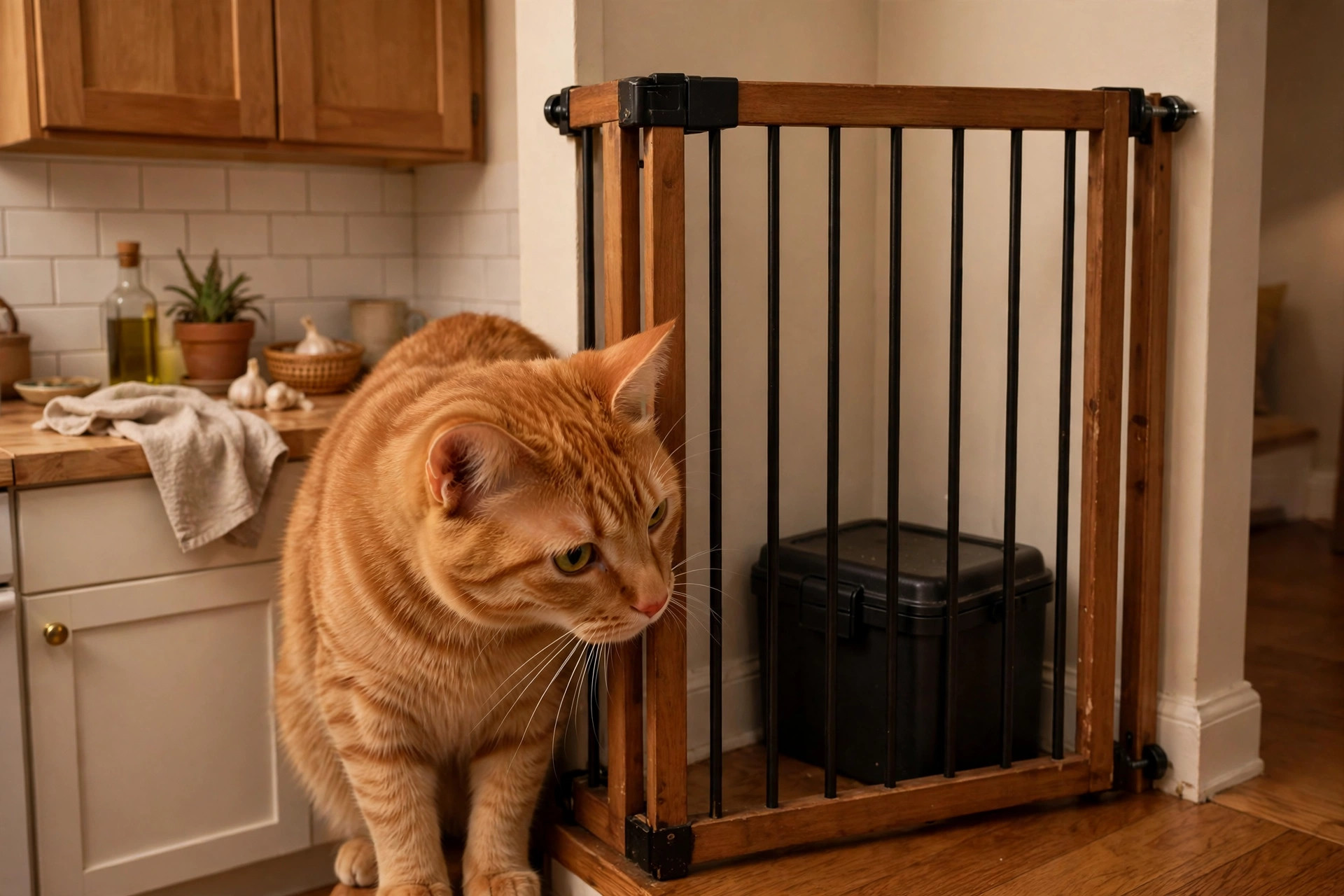
Apartment living means shared walls, and shared walls mean shared pests. When the roaches or mice arrive, the standard advice — “just set traps” — collides with a dog who eats first and asks later, or a cat who considers a glue board a fascinating new texture. The good news: you do not have to choose between a pest-free apartment and a safe pet. You need the right trap types, placed where the pet physically cannot reach them, with a plan for the day something goes wrong.
Trap types, ranked by pet safety
Not all traps are equal, and the packaging’s “pet-safe” claim usually means “safer than the alternative,” not “harmless.” Here is the honest ranking for homes with dogs and cats:
| Trap type | Pet risk | Works on | The catch |
|---|---|---|---|
| Enclosed bait stations (tamper-resistant) | Lowest | Roaches, ants | Must be genuinely tamper-resistant; cheap ones pop open |
| Gel bait in cracks and crevices | Low | Roaches | Applied where pets cannot reach; the real workhorse |
| Enclosed snap traps (tunnel-style) | Low–medium | Mice | Noses can still reach the entry; place inside cabinets |
| Glue boards | Medium–high | Roaches, mice | Paws, whiskers, and tails stick; removal is miserable |
| Loose poison pellets / blocks | High | Mice, rats | Never use with pets; secondary poisoning from eating a poisoned mouse is real |
The practical takeaway: for roaches, tamper-resistant bait stations plus gel bait in crevices do the job in most apartments. For mice, enclosed snap traps inside cabinets beat poison on every dimension that matters to a pet owner — a poisoned mouse dies inside your walls, and a dog that catches a poisoned mouse before it dies gets the poison secondhand. If your building’s management uses loose rodenticide in common areas, ask what and where; you cannot control the hallway, but you can know which doors to keep shut.
Placement: the pet cannot reach it, period
“Out of reach” means different things for a Labrador and a cat, and most placement advice is written for neither. Map your apartment by species:
- For dogs: inside closed lower cabinets (with a child latch so the dog cannot nose them open), behind the fridge and stove where the gap is too narrow for a snout, and on top of high shelves for roach stations. Remember a determined dog stands on hind legs — “counter height” is reachable for any medium dog.
- For cats: cats go everywhere dogs cannot, so “high” is not safe from cats. Use enclosed stations only, wedged where the cat cannot bat them around: behind appliances, inside latched cabinets, under furniture with less than 3 inches of clearance so paws cannot reach under and flip them.
- Glue boards, if you must: inside a covered box with roach-sized entry holes, placed in a closed room the pet cannot enter. Never open on a floor where a cat walks — a cat on a glue board is a vet visit involving oil, shaving, and a very upset animal.
- Label and map. Write the date on every station with a marker and keep a simple map (a phone photo of each location works). You will forget where they are; the map is how you find them all when the infestation ends or a pet acts strangely.
The other half of placement is behavior: a bored pet investigates everything. During an active pest-control period, increase enrichment — puzzle feeders, extra play sessions — so the new plastic boxes on the floor are less interesting than the alternatives. Our indoor cat enrichment schedule and dog exercise schedule both have low-effort options that keep noses busy elsewhere.
- Use tamper-resistant enclosed bait stations and gel bait for roaches; enclosed snap traps inside cabinets for mice.
- Never use loose poison pellets or blocks in a home with pets — secondary poisoning is the real danger.
- Place traps where the specific pet cannot physically reach: latched cabinets for dogs, enclosed stations wedged tight for cats.
- Photograph and date every trap location so you can find them all later.
- Keep the poison control number and the product packaging accessible — the label is what the vet needs first.
When the building sprays: coordinating with management
In most apartments the bigger risk is not your traps but the building’s. Management-scheduled pest treatments arrive with a notice on the door and a chemical you did not choose. The protocol from our guide on apartment pest spraying with pets applies in full, but the trap-specific additions are:
- Ask what they are using, in writing. “Standard treatment” is not an answer. You need the product name so your vet can look up the active ingredient if something goes wrong.
- Pull your own traps before they come. Technicians move furniture and will find — and possibly relocate — your carefully placed stations. Collect them, treat, ventilate, then re-place.
- Keep pets out for the full re-entry period, then add a buffer. The label’s re-entry time assumes an adult human, not a cat grooming its paws on a treated baseboard. Add several hours, wipe down pet-level surfaces (food bowls, bedding areas) before the pet returns.
- After treatment, watch for the migration effect. Pests fleeing a treated unit move through walls into neighboring units — yours. The week after a building treatment is when your own enclosed stations earn their keep.
If contact happens: the first 30 minutes
Despite the best placement, pets find things. Know the response before you need it:
- Glue board contact: do not pull — you will tear skin. Work vegetable or mineral oil into the stuck area to dissolve the adhesive, then wash with mild dish soap. Paws and tail fur may need trimming; whiskers usually pull free with oil and patience. Call the vet if skin is torn or the cat ingested adhesive.
- Bait station chewed open: identify the product and active ingredient from the packaging (this is why you keep it), estimate how much is missing, and call your vet or poison control immediately. Do not induce vomiting unless instructed — some bait ingredients cause more harm coming back up.
- Snap trap injury: most cause bruising or a sore paw rather than fractures, but check toes and nails, and watch for limping over the next day. Clean any break in the skin; trap mechanisms are not sterile.
- Pet ate a poisoned pest: this is the secondary-poisoning scenario. Note the time, save the pest’s body if you can do so safely (bag it), and call the vet with the rodenticide’s active ingredient. Anticoagulant poisons have an antidote (vitamin K1) but it must be started before symptoms appear — waiting to “see how she does” wastes the window.
The cheapest pest-control safety device is a phone photo: the product label, the trap locations, the date placed. In an emergency you will not remember the brand name; the photo will.
FAQ
Are ultrasonic pest repellers safe for pets?
They are safe in the sense that they do not emit anything toxic, but their effectiveness against roaches and mice is poorly supported — and some devices bother dogs and cats, who hear in the same ultrasonic range the device targets. Do not rely on one as your only control; use it (if at all) alongside real traps. Our safety breakdown of ultrasonic devices covers the hearing-range concern in detail.
Can I use diatomaceous earth with pets around?
Food-grade diatomaceous earth is low-toxicity but it is a fine dust — a lung irritant for pets and humans when airborne. If you use it, apply thinly in cracks pets cannot reach (behind appliances, inside wall voids), never as a broadcast powder on floors, and keep pets out of the room during application until the dust settles.
My cat keeps batting the bait stations around. What do I do?
The station is not secured enough. Wedge it so it cannot move: behind the fridge, inside a latched cabinet, or fixed with removable adhesive strips to the floor inside a cabinet. A bait station that slides across the floor is a toy; a bait station that does not move is furniture. If the cat is determined, switch to gel bait in crevices only — there is nothing to bat.
How long should traps stay out?
Until two weeks after the last sign of pest activity, then collect them all — that is what your location map is for. Traps left out indefinitely become forgotten hazards: bait dries out and stops working, glue boards collect dust and pet hair, and you stop remembering they are there.