Apartment Pet Earthquake Preparedness Checklist
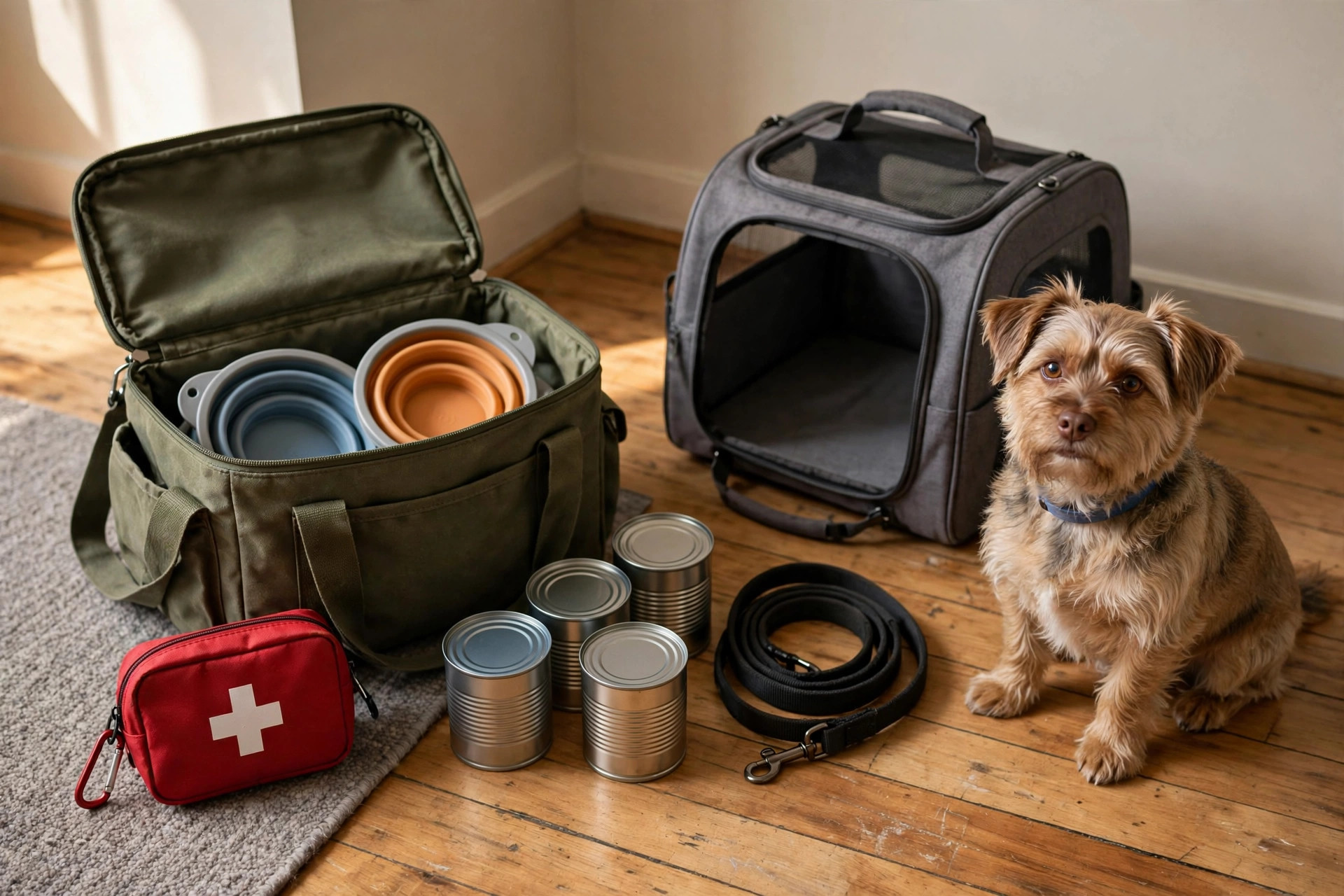
Earthquakes give no warning, and in an apartment the danger is not just the shaking — it is the tenth-floor stairwell with a panicking dog, the bookshelf that becomes a landslide, and the cat who vanishes into a wall void the moment the building moves. Pet earthquake preparedness has three parts: a go-bag that lets you leave in two minutes, a pet-proofed unit that does not become a hazard zone, and a practiced plan for the shaking itself. This checklist covers all three.
The pet go-bag: pack it this weekend
One bag per household, stored by the front door — not in a closet, not in storage. If you have to leave in two minutes, the bag goes with you. Contents, in pack order:
- 3 days of food in a sealed dry bag or vacuum packs (rotate every 6 months; write the date on the bag). Canned food doubles as water content.
- Water: 1 gallon per day for a medium dog, half that for a cat — plus a collapsible bowl. Pets dehydrate fast in stressful heat.
- Medications: a 7-day supply in original bottles with dosing instructions taped on. Refill the go-bag supply when you refill the prescription.
- Leash + harness and carrier: leash clipped to the bag’s outside; carrier stored open nearby so the cat already sleeps in it (a carrier that only appears in emergencies is a trap the cat will fight).
- Vet records: vaccination proof and a photo of you with your pet on your phone AND a paper copy in a zip bag. Shelters and emergency vets require proof of rabies vaccination.
- ID: collar with tags on the pet at all times (indoor cats included — quakes open doors and break windows), microchip registered with your current phone number.
- Comfort + sanitation: a worn t-shirt (your scent calms), poop bags, a small litter tray with a zip bag of litter for cats, puppy pads for dogs.
- "Pets inside" decals on the front door and a window: rescuers check marked units first. List species and count.
Rotate the go-bag food and meds when you change your smoke alarm batteries — tie it to an existing twice-yearly habit or it will quietly expire. Set a phone reminder for the next rotation date right now.
Pet-proof the unit against shaking
Most earthquake injuries to pets come from the apartment’s contents, not the building. A Saturday project:
- Anchor tall furniture. Bookshelves, dressers, and the TV: strap to wall studs with furniture anchors ($10–$20 per set). A falling bookshelf is the #1 household quake hazard for floor-level pets. This is renter-friendly — small screw holes patch with spackle at move-out, and it doubles as climbing-cat protection every day.
- Secure the water heater and fish tanks. Strap the water heater (landlord’s job — ask in writing). Fish tanks under 20 gallons: place on low, stable stands away from the bed; quake mats underneath reduce sliding.
- Move heavy objects down. Anything above 4 feet that could fall on a pet’s usual spots — relocate it. Check above the dog’s bed, the cat’s favorite windowsill, and the litter area.
- Latch cabinets. Child-proof latches ($8–$12 for a pack) on kitchen cabinets keep glassware and cleaning chemicals from avalanching onto the floor where pets walk barefoot.
- Know your gas shutoff. Learn where your unit’s gas valve is and keep a wrench nearby — but only shut it off if you smell gas; unnecessary shutoffs require the utility to restore service.
During the shaking: drop, cover, hold — with pets
The official guidance (drop, cover, and hold on) applies with animals added: drop where you are, cover under a sturdy table or desk, and hold your pet with you if they are within arm’s reach — do not run across the room to grab a cat. A terrified cat will scratch; wrap them in whatever is at hand (a jacket, a blanket) rather than chasing. Dogs usually freeze or try to stay glued to you — let them crowd under the table with you. Never use the elevator during or immediately after shaking; stairwells may have debris and panicked crowds, so leash the dog and carry the cat in the carrier for the descent if you must evacuate. Stay away from windows, mirrors, and anything glass. Count to 60 after the shaking stops before moving — aftershocks arrive within minutes and falling objects shift.
After: the 72-hour plan
- Leash and contain immediately. Fences are down, doors are broken, and scared pets bolt — most post-quake pet losses are escapees, not injuries. Carrier the cat before opening any exterior door.
- Expect behavior changes. Hiding, appetite loss, and house-soiling for days after are normal stress responses, not training regressions. Keep routines as normal as possible; do not punish fear behaviors.
- Check for hazards before free-roaming. Broken glass, spilled chemicals, and exposed wiring turn your unit into an obstacle course — sweep the pet areas first, paws and all.
- Know the shelter reality. Most general emergency shelters do not accept pets (service animals excepted); co-located pet shelters fill fast. Identify your city’s pet-friendly shelter options NOW and save the addresses in your phone — this is the single most overlooked item on every preparedness list.
- Buddy system. Exchange keys with a trusted neighbor and confirm you will each grab the other’s pets if a quake hits while someone is at work. Write it down; verbal agreements evaporate in chaos.
Fold this into your broader emergency planning: our fire escape checklist and high-rise evacuation plan share the same go-bag, and your vet records checklist keeps the paperwork half of this list current.
FAQ
Do animals really sense earthquakes beforehand?
There are countless anecdotes of odd pet behavior before quakes, but no reliable scientific evidence of prediction — and the reported "warnings" are minutes at most, not enough to act on. Do not wait for your cat to tell you; the go-bag is the plan.
Should I crate my dog while I’m at work for quake safety?
A sturdy crate in a safe spot (away from windows and tall furniture) actually protects a dog during shaking — it cannot be hit by falling objects or bolt through a broken door. For cats, a safe room with the carrier open inside works better than confinement.
What if I’m on a high floor and the stairs look damaged?
Do not use stairs that show cracked steps, displaced railings, or jammed fire doors — shelter in place in the safest room (interior, no windows, under a table) and wait for official guidance. High-rise buildings are engineered to sway; most remain occupiable after moderate quakes.
How do I prepare a fish tank or reptile enclosure?
Quake mats under tanks, lids secured with clips (not just resting), and stands braced against tipping. For reptiles, a small transport tub in the go-bag with a heat pack covers evacuation; know that most emergency shelters cannot house exotics, so identify a boarding vet in advance.